
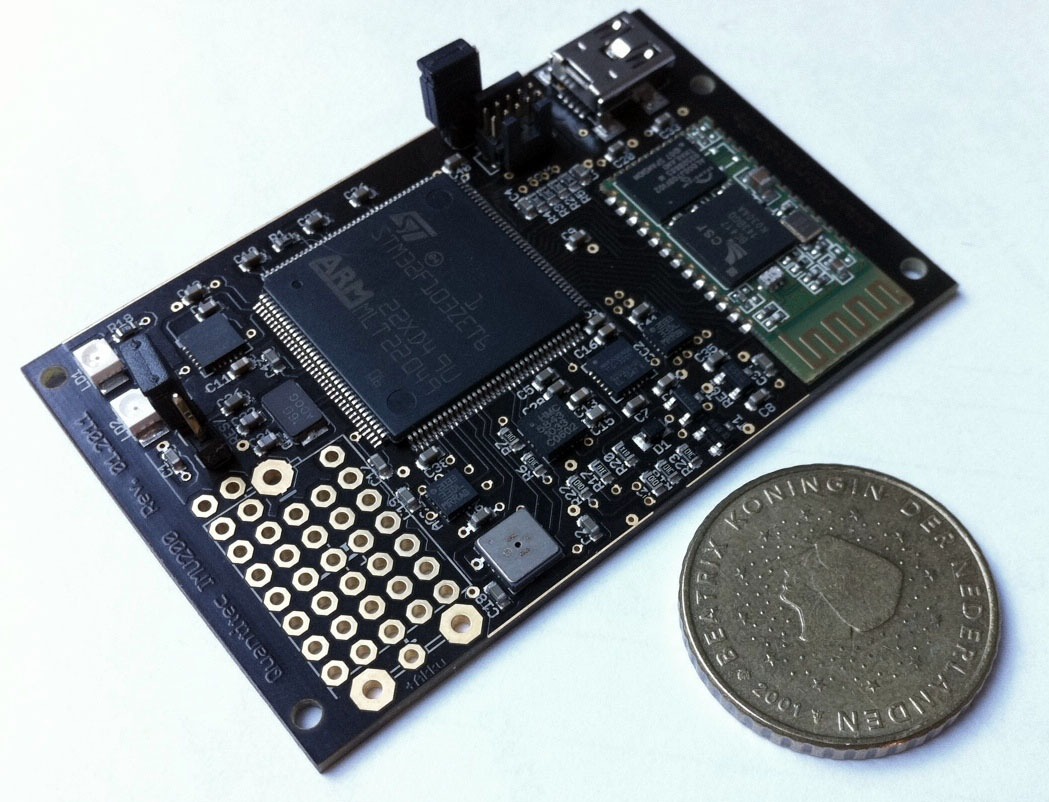
Inertial Labs has launched the INS-NV, a programmable development platform intended to help engineers build alternative position, navigation and timing systems for GNSS-denied or GNSS-compromised environments. Inside GNSS reports that it combines an inertial navigation system, an attitude and heading reference system and an NVIDIA Jetson Orin NX edge processor to host machine-vision and navigation algorithms Inside GNSS reports.
The documented protected function is navigation continuity, not disruption of RF signals or direct detection of a GNSS attack. The platform combines calibrated tactical-grade MEMS accelerometers and gyroscopes with a barometric altimeter, magnetometers and a receiver covering GPS, QZSS, GLONASS, Galileo, BeiDou and NavIC. Inertial Labs also says developers can add its sensor modules and commercial off-the-shelf vision cameras and run their own visual-navigation stacks alongside the company’s INS and AHRS software according to Inside GNSS.
That distinction matters under the conditions disclosed: the announcement says the INS-NV is intended for operation in GNSS-denied or compromised environments, but it does not report accuracy figures, test locations, outage durations or measured performance under jamming or spoofing. It says the platform is available immediately, with MAVLink, ASPN-, pntOS- and MOSA-compliant variants available on request; that is product availability for development, not evidence of operational deployment Inside GNSS reports.
A separate sponsored report presents a different resilience method from Elsight. Euro-SD reports that Elsight’s POSITIONING capability uses cellular measurements, including timing advance and surrounding base-station signals, together with motion and velocity data and GPS when it is considered reliable. The report also describes an explicitly stated spoofing-detection function: comparing cellular-derived and GPS-derived positions and generating an alert when they diverge beyond a threshold Euro-SD reports.
The source-backed comparison is therefore specific: INS-NV emphasizes inertial, GNSS and optional visual sensing for continued navigation, while Elsight’s reported approach adds a cellular-derived position reference and an alert for GPS disagreement. Neither fetched document supplies a common test demonstrating performance against a defined RF threat, so the materials establish different claimed protection methods rather than comparative field effectiveness.